Showing posts with label daily life. Show all posts

Monday, April 26, 2010

The Mango Scandal

I used to looove mango as a child. The sweet-sour orange fruitiness with a slight flavor of cedars, could there be any better fruit?! When my mom brought them home on summer days I didn't know where they came from. Today I do and as a consequence I don't buy them anymore.
I was skyping with one of my friends from one of the biggest mango-growing countries, India, just the other day. She is a very sweet girl from Pune. Two years ago when I visited her and her husband they told me about the mango season. The fresh Indian mango is nothing like the unripe green desaster we get in the supermarkets here. They were talking about the quality of their mango with dreamy eyes, in short, they absolutely made my mouth water.
But then they told me that the best mangoes never reach the Indian people. They are shipped to the international markets right away.
Now, two years later, things have gotten worse. It is mango season right now and my friend told me they've had a single mango and only because someone has given it to them. The price of mango is so high that she simply can't afford anymore - and she belongs to the Indian middle class. The wikipedia entry listing uses of mango in Indian and Pakistani cuisine stretches three paragraphs. How will that work when no one can afford them anymore?
I told her that I don't buy mango in Germany, though I love them, as they are either unripe or brought by plane, which is environmentally insane. I didn't dare telling her how many mangoes I see rotting in our supermarkets until noone wants them anymore...
That's a downside of globalization.
What do you think? Can we make a change buy responsible shopping or are we helping the markets of the country of origin by buying tropic fruit? Which fruit are "exotic" in your country? Do you buy it?

Thursday, April 15, 2010

Series: Cultural Stereotype Buster: Western people are more hygienic - NOT!

Western people are so much more hygienic. They don't eat with their hands, don't spit on the floor, have superclean flats and streets, don't blow their nose with their hands, you know what I'm talking about... When I encountered other cultures more intensely this world view that I had absorbed from my environment was suddenly challenged.
The first time was with an Italian friend of mine on my stay abroad in Ireland. A group of some of my international student friends was discussing hygiene and my Italian friend complained that there wasn't a bidet in any bathroom in Ireland. He asked how you are supposed to clean yourself after the toilet without a bidet. My Dutch friend and I told him that that was what the paper was for. He looked at us in disgust and said: "But that's not enough to clean yourself!"
You haven't seen a bidet yet? Neither had I when I went to Italy for the first time as a teen. This is what I discovered:

As you can see, it's a very low washbasin. My first thought was that it looked like a men's toilet. My parents were so kind as to explain... Still, being told how to use it and being able to use it properly are two different things.  If you ever come in need of using one, here's a description of how to handle the situation (believe me, a bidet is not self-explanatory, really).
In India I have seen heaps of trash on the street. People spit on the ground in public and had no (!) toilet paper. On the other hand, Indians keep the left hand off the food at all times. One hand is the one for the bathroom and the other for the food. I guess many Indians don't mind if us Europeans struggle to eat with only one hand and use both, but they'd never do it themselves. And if you've ever tried to rip some bread off a loaf with one hand you know a second hand comes in handy. If you're saying this is just a small exception to an otherwise less hygienic people let me tell you you are wrong. How do you drink straight from a bottle? Well, you surely put the bottle to your lips and - Not the Indians! They pour the water in their mouth without touching the bottle with their lips. They use their right hand to hold the bottle to keep it above the mouth and then pour the water. Unfortunately I don't think there is a video online showing how it is done. Drinking like that requires quite some practice. Lucky for me it is warm in India and it wasn't so bad that I spilled water all over my clothes...
Eating with only one hand and not drinking straight from the bottle are both measures that reduce the risk of infection by bacteria in the warm and humid Indian climate.
Other Asian countries also have hygiene habits that are stricter than Europe's. Whenever I see pictures of streets in Japan and Singapore I am amazed by the cleanliness of the streets. Not one piece of paper in any of the images. They must either be really disciplined photoshoppers or they just have much cleaner streets than us Europeans. I know the punishment for littering is quite high in Singapore and I'm not sure about Japan, but rules like that wouldn't work that well here.
How about you? Did you visit a country that had much stricter hygiene habits than your home country? How did you feel? Did you follow or stick to your own system?

Tuesday, April 6, 2010

Easter and Update

All of you who celebrate Easter, I hope you had a nice one.
So, what do we do in Germany? My family used to have a big Easter breakfast (without guests, just my sister and my parents). After that the kids would search eggs in the garden, or, if the weather was bad, inside the house. Today my future hubbie's parents and my mom were visiting our grandparents and my sis was on holiday, so we organized the breakfast for whoever was left (not much, let me tell you...) I did some last minute watercolor egg painting and we had rolls and a walnut ciabatta I had prepared and eggs, different kinds of cheeses, sausages, smoked salmon, jam and a lot more. In the picture you can see our dining room table after the breakfast. All the books you see there are cook books... I have a little obsession.

So, what else is planned after one month of this blog? We have a few more contributions of the cultural ambassador series (cross culture email swap) which I am working on right now. I have worked a little on the layout as well and will have to start thinking about a header soon. I am also preparing my second tutorial, still something Japanese, I can tell you. And then there are all the little topics that come to my mind. Oh, and some travelling experience. If there's anything specific you'd like to see or contribute, don't hesitate to let me know.
Thanks to all my readers for your interest and comments, I hope you'll enjoy future contributions as much as I do.

Yours,

Charlotte

Monday, April 5, 2010

The best skin color in the world - tanning, whitening, or what?

In Germany and many western countries a healthy tan (not the overdone "coin-mallorca" one) is regarded as quite attractive. I guess the reason is that it means you have the money to go on holiday to a nice and sunny destination. Historically, being tanned was often not regarded attractive because it signified that you belonged to a lower class. Only farmers and street merchants had to work outside where their skin would get darker from the sun. To appear more "noble", people even practised skin whitening by applying (often lead-based) powders.
Today, on the other hand, there is a whole tanning industry at work providing us with a more or less fake tan. Tanning spray, self-tanning lotion, showers, tanning beds... I know there are also people out there who tan for health reasons and I'm not talking about that.


The text under "self tan" says "wonderfully even tan without sun".
When I was in India, the situation was absurdly reversed. Darker people were regarded much less attractive. My pretty bland skin color over here was suddenly regarded very nice. This shows also when you look at posters of Bollywood stars: with some you can hardly tell they are not white.
There is no difference for Indian men or women. I was quite surprised when I heard that Sharukh Khan was promoting skin whitening cream for guys. The mechanism is simple but effective: dark = unpopular and stupid, fair = popular and smart. It would be funny if it wasn't so sad, have a look:


So, cappucino/very light brown is the answer for everybody? Nope, that'd be too easy. Here's an ad for snow white. Not as funny, but interesting:


It might have been a coincidence but on my tour through the north of India my driver was of a very dark shade, his sister with a university degree as a teacher on the other hand was a lot lighter. My driver and I had trouble communicating as he barely spoke English and I almost no Hindi. I understood, however, that he repeatedly talked apologetically about his own dark complexion and told me about his pretty sister.
I wonder how much of that is coming naturally as a desire for what is rare or has a certain luxury connotation (being able to afford holidays or belonging to the ruling class) and how much is industry, getting us to feel bad so we buy stuff we wouldn't otherwise.
After all this I enjoyed hearing about the operation beautiful campaign where you leave affirmative messages in public. I found one of the handwritten "you are beautiful" notes once and it really made my day. Have a try; I will start taking some post-it notes with me from now on, so I can add a touch of feel-good here and there (as a teacher having post-its is always handy anyway).
I also like this charity project that helps young black girls explore beauty through photography. I think there needs to be a bigger effort to counteract the influence of advertising.
My reader "Onelovelygurl" was so kind as to remind me of the Dove campaign to show more natural women in advertising. Of course, these were also digitally manipulated, but it is a step in the right direction.
One of our most famous women magazines, BRIGITTE, now only uses "real people" as models. Many of them are still almost as thin as models, but it looks a bit more healthy on the whole. Some people complained that no one wanted to see "ugly" people showing off fashion (they were still really pretty and had makeup and all, they were just not skinny size). What do you think?

Do you know about any campaigns that make a change by supporting inner beauty ?

SERIES: Unravelling Foreign Craftiness: KIRIGAMI

Oh, I get the "being a noob"-feeling smacked in the face so often since I've started blogging a month ago. Now I have accidentally deleted one of my best posts (as I thought I was just deleting duplicate copies). I have a backup, but all your lovely comments are lost. I am soo sorry and sad. You're probably not going to make this mistake, but let me tell you, always check which version you are actually deleting. I also have to redo all the links :-( So here is the recovered version:


Part one of uncovering foreign craftiness will feature Japan. Some of you might know Kirigami already. I'll give you a little portrait about the craft, some resources to get started and my own experience when I tried my luck. I used to do kirigami a little as a kid (cutting snowflakes...) but apart from that I didn't have a lot of experience. Then one of my swap-partners and first blog followers was so sweet to send me a kirigami starter kit. Also see the next post for a tutorial of a kirigami window hanging.

Craft
Kirigami


History and Role in the Country
As you could have guessed, the first part of the name "kirigami" means "to cut" and the second "paper". Cutting the paper is often combined with folding the paper.
I couldn't find a lot about the history and role of kirigami. Several sites mention that kirigami goes back a long time and was used to create offerings for the gods in temples. It later became recognized as an art form. Today many primary school children learn it by cutting snowflakes or making paper doll chains.
Artists on the other hand create amazingly complex designs as you can see on this page (that is also a good starting place for information about kirigami).

How it is done
There are millions of ways to do kirigami. You can fold the paper first and then cut away shapes to create symmetry or even fold in between. It completely depends which project you'd like to do. Have a look at what you get when you search for kirigami in flickr. Amazing variety, isn't it?!

The snowflake is a good place to start as the complexity is only determined by your skill, it doesn't take too long (not like an altered book project), the ingredients are cheap and the results are very interesting designs. And you won't necessarily end up with a snowflake as my how-to shows...

Here's a tutorial of how to create the basic snowflake:


Here's a more complex one (although the background music makes is quite annoying after this long winter...). As you can see, there are different folding techniques. 


Ok, but what do you do with all the snowflakes you created? This designer's site has some awesome and stylish products made from kirigami designs. He makes them from fabric or uses the designs as stencils.
Aren't these coasters nice:


If you are in a place that has internet but no paper, this site has a game that lets you cut snowflake designs (with straight lines). It is also nice practice at times.

Here's a video that shows you how to do a three dimensional christmas tree with star on top by combining folding and cutting. Not really in season, but it's lovely.

Beginner's review
Difficulty: 
Totally flexible. When you start with the snowflake even kids can do it and at the same time there is no upper limit. The complexity of the design will reflect your skill. If you aim higher and attempt some pop-up shapes or architecture, the difficulty increases significantly. Beware as you can become frustrated if you aim too high.

Equipment:
You only need good paper scissors and paper. My scissors had a round point which was helpful as it didn't get caught in the details I had already cut. A sharp point is probably better for details though. Use thin paper for snowflakes so the multiple folds don't get too bulky. I used thin origami paper. You can use different colors so you'll get more than just white snowflakes.

Fun factor:
High. It was fun to do something I've done as a child but now on a more advanced level. Also, cutting snowflakes doesn't take long and the end result is always a nice surprise. So five stars for fun factor!

Monday, March 29, 2010

SERIES Cultural ambassadors: USA (Cross-culture email connection)

Today we'll get a personal insight into life in the US aside from the popular media. This contribution is from the north east of the USA. I again added some pics as illustration in the end.

Hey!  I'm a 19 year old college student in the United States.  I hope you enjoy reading my answers!


a description of what you eat for breakfast
I’m not very in to breakfast- when I eat it it’s usually a bagel on the run.  When I’m home my mom will sometimes make a big breakfast for my family.  We’ll have biscuits, eggs easy over, and bacon.  My dad usually makes orange juice, but I’ll always have a glass of Cranberry Pomegranate juice (slightly addicted…)  Either that or my father will make pancakes.  Depending on the season he’ll put blueberries inside of them, or we’ll make a peach topping for them.  So fantastic!

a short description of a typical work day
I’m a full time student.  I will, however, describe my most stressful day of the week- Monday.  I wake up at 8am to get ready for my 9am Psychology class.  After class I walk to a nearby elementary school to do observations for my Education class.  Straight after that I walk back to campus to grab lunch with my friends.  At 2pm I have my Gothic Literature class-  it’s great because I have two friends in the class with me, but the teacher has no concept of the work load she’s giving us!  At 3pm I have lab for my Geography class, and then about a half hour break before my Education class.  Because that class is only once a week it is 2 hours 15 minutes long.  During break during class I usually grab something to eat for dinner later.  I tend to hang out in the building in which my class is located for another hour to do some homework.  I’m usually back in my room by 9:30/10pm.  Longest day of the week!

a description of your favorite day off (weekend or holiday)
My favorite holiday is Christmas- it’s one of the only days that all of my family gets together.  My grandparents come over Christmas morning to see us open some of our presents, and then we head out to West Virginia where a lot of my family lives.  I get to hang out with my cousins for hours, and we always have a ton of fun just messing around.  We sleep over that night, and the day after Christmas the entire family goes out for breakfast.  

a short description of your country and its position in the world, including something you like about it and something you don't like
I live in the US, in Maryland.  In case you didn’t know, Maryland is on the East Coast, and I live about half way between Washington D.C. and Baltimore.  It’s hard to think of things I like and don’t like about the US.  For a long time there has been a lot of problems in the United States, and we still have a lot of work ahead of us.  It’s funny that what I love and hate about the US are the same things.  I love the diversity and acceptance there is here.  I grew up in an area with people of all types, and everyone was so accepting of everyone else.  When I left for college I realized how intolerant people in the US can be, something I really hate about the United States. I was used to being friends with so many different people, but at my college there seems to be a huge gap between people who aren’t the same.  At home I had many Jewish friends, and thought nothing of it.  It was just part of who they were, and it wasn’t a big deal.  One of my friends at school is Jewish, and I’ve realized that people treat her a whole lot differently than they would had we been in my hometown.  She’ll tell me how some people are extremely anti-Semitic, supporting unfounded stereotypes.

a list of languages (optional: dialects) that are spoken in your country
As a self-proclaimed “mixing bowl” of many societies, there are many languages spoken here.  English and Spanish are the most commonly spoken languages, although we have no ‘official language’.  In my area there are a lot of Chinese speakers as well. 

a description of the most common ethnic minorities in your country and how they are viewed
The most common ethnic minority is probably Mexicans.  There is a mostly negative view, and a huge push to further restrict immigration.  This is sort of one of those unsolvable issues, although if our economy continues to suck there will be no reason for Mexicans to come here. As an education major, I am most interested in the effect of immigration on children. A lot of students who are here illegally may have lived here for most of their lives. These children are still not considered Americans, and can be shipped out whenever the US decides they aren’t wanted anymore. These children see the US as their home (it is, after all, the only country they’ve really known) but do not have the chances at education that others do.  It’s a hard thing to figure out…

a list of the three most important holidays of your country and how they are celebrated. (NOTE: I could only think of 2 that are celebrated by pretty much every American with any sort of importance).
-4th of July- When the US declared its independence from England!  And a day of BBQs and fireworks!  We usually visit our family in Michigan (state in the Northern part of the US, touching Canada).  It’s a good 10hr drive, and we usually spend the week.  On the fourth of July we’ll watch a parade in the morning, go to all the sidewalk sales in the downtown area, have my family over to our vacation house for burgers and hot dogs, then go to Lake Michigan to check out the fireworks!

-Thanksgiving- we give thanks for everything we have.  The first Thanksgiving was supposedly celebrated between the Pilgrims and Native Americans, although I highly doubt it would have happened.  But it makes for a nice holiday.  Most families get together for the day and eat. For Thanksgiving it is usually just my immediate family.  Because none of us like turkey (and because there are only four of us) we usually have chicken.  We’ll also make stuffing, mashed potatoes, green beans with bacon (yum!), cranberry sauce, sauerkraut, and rolls.  For dessert I make a pumpkin pie.  The next day a lot of stores have pretty extreme sales (it’s called ‘Black Friday’), and a lot of people go out to do some extreme shopping.  I’ve only braved the stores once- it’s just way too crowded!


a description of the role of men and women in your country
Men and women have a pretty equal role in the US.  Women can and do everything men do, and encouraged to do so.  There is, of course, still a lot of inequality.  Women performing the same job as men are usually paid less, and it is less likely for a woman to be promoted than a man.  Roles in the household are more equal than they used to be, but women on a whole still spend more time doing household chores than men.  But women have gone a long way since way back when- I’m sure that in my lifetime I’ll even see a woman president (we came close in the last election)!

the role of religion in your country
Religion has a weird role in the US.  Technically it doesn’t have any say in our government, although governmental officials are more than happy to pull the Bible card to gain support. Honestly, I think the role of religion depends a lot on where you live.  In my hometown religion isn’t a biggie.  A few of my friends went to Church often, but we never really talked about our own religious ideas.  In the community in which I go to college, religion seems to have a larger role in people’s lives.  The largest club on my campus is a Christian one, and most people I know go to some sort of bible study every week. It’s weird because I’m so used to not caring about religion, but it’s now being sort of thrusted upon me.  Most of my friends see religion as more of a problem than anything else, and tend to be suspicious of any overly-religious person.  We’ve all had that experience of someone trying to ‘save’ us, and it gets really tiring.

For those of you who haven't seen a bagel before:
Wikipedia says bagels have a Jewish background. The round buns have a hole so they could be transported on the Shabbat day without being touched by stacking them on a wooden pole. Also, they were prepared a day in advance. That way they could be finished after sunset on Shabbat day so you'd quickly have something ready as soon as you were allowed to prepare them again.

I liked the description of U.S. festivals. I would love to be in the US for the Fourth of July (Independence Day) just once. It's my birthday and I'd really like to see the fireworks and parades.


When it comes to food I'd like to mention that American pancakes are different from German ones. German pancakes are bigger, softer and less fluffy than their American counterparts. They are often filled with fruit or eaten with nutella or the like. Many people also drop apples slices into the dough in the pan. German pankaces look like this:


If you want to try making your own true American pancakes, here's a picture and a link to a good recipe (from the BBC with conversions, although every American family probably has its own recipe and many moms will do completely without one).


Here's another U.S. contribution to this series by a girl from Florida, in the south of the USA. She put her description up on her blog. Also don't forget to check out the other countries if you haven't already. So far we've got cultural ambassadors for 
Feel free to contact me if you'd like to contribute your own story (especially if your country isn't featured yet).

DISCLAYMER:
All umarked text in this post was supplied by a third party. The opinions expressed are not the same as those of the author of this blog. According to §§8 to 10 of the German Tele-Media Act, I am not obligated to monitor third party information provided or stored on my website. However, Ishall promptly remove any content upon becoming aware that it violates the law. My liability in such an instance shall commence at the time I become aware of the respective violation.


Friday, March 26, 2010

SERIES: Cultural ambassadors: BRAZIL (Cross-culture email connection)


Next in our series is fancy Brazil. This should be interesting as we rarely hear anything about Brazil apart from football. That's why I'm very curious about my fellow swapper's portrait of his home country.


A little about Brazil
Breakfast
Well, i'm not used to eat breakfast. When i do, it´s chocolate milk. But when i eat a biiiig breakfast, it's bread, with butter or cream cheese, a juice, a piece of cake (corn or orange cake). Sometimes we have something that i call "cheese bread" (translating exactly as we say in portuguese), but is also known as "cheese roll", and it´s delicious. I included a recipe here, so everyone can try it. Is really common here, eveywhere you can find them frozen or just recently off the furnace.
Day at work
I´ll describe how my day was today, march 24. I went to work by car, my mom drove me because i´m getting my driver´s license just now. As i´m a journalist, i write at a local newspaper, and at the same place runs a tv channel (only cable, but still) and we try at most to do the same news for both. I got there and as i get 1pm, i have to listen to everything the other reporters already did and write it down. So, today we had a non-profit organization group called Amor-Exigente (Toughlove), with two interviews about their work in TeresĂłpolis, where i live. Then, a community manifesto about the bad maintenance of a street, also with an interview.
I went to my lunch break and payed the first tax to get my driver´s license, R$174, about U$90.
Back at work, i started writing the texts. While at the Toughlove story, i had to stop and listen to another and more important interview about city´s health problems - really political and problematic story, but there we go.
In the meantime, some crazy old man showed up in the reception asking about an article that he insisted was not on the air or in the newspaper. Crazy because it was, two days ago, but he insisted that it wasn't and started yelling and stuff....Big mess. The reporter who was responsable for that article went downstairs to talk to him, and came back crying. With this situation, the guys went there and explained, for the 468768418th time, that it was broadcasted, and he "understood" and went away.
Then i was only writing, i also ate some cookies and laughed a little with my co-workers, but that was it.
By 6pm, my editor went to college - he´s into biology - and i finished the articles and waited for my boss - and the person who design the newspaper - to start mounting the first page.
As we had some difficult articles, i had to wait until one of the reporters finished it so we could send the first page to print. And by 7:30 i was getting a cab and going home.
- what a "SHORT" description, huh?

Day off
Here in Brazil we have  a loooooot of holidays, but since i started working at the newspaper (since july, 2009), i don't have much options than the weekends. When it´s a Friday, most likely i´ll have it as day off. But any other day, i´ll have to work...Carnival in Brazil means at least three days off - i had none and worked more than normal days.
In weekends, i like to stay at home watching tv series, sleeping and playing games. But i also go out, at night, to bars or to friend´s houses. Sundays means sleep and crafts day for me, but my boyfriend/fiancee/hub (well, nine years together!) doesn't get really excited when it comes to crafts, so...Sometimes i have to craft another day.

About Brazil
 
My country is in a really good position now. Except for the fact that it´s still considered "third world". From the outside, people get a totally wrong and different view of Brazil. No, we are not just forest, we do not live with monkeys, we have malls, cars, food...The metropolises are well developed, slightly different from NY or any other - so people say, i haven't been outside Brazil.
The current president, Luis Inácio Lula da Silva, is getting great publicity and the leaders are starting to trust Brazil and invest, believe and help. Brazil sent more money than most countries, getting close to USA help.
From the inside, we have lots of rotten situations, in politics and society. The police is, in most cases, corrupted and able to take bribes. This happens for cultural reasons, as we call "jeitinho brasileiro" - brazilian way of life. I had to study about brazilian culture in college, and i am pretty aware of this kind of behavior. A friend of mine was in Canada for Winter Olympics for OBS, and we were talking last weekend about the subway. In Vancouver, people only have to pay for a ticket and get in. Here, it would be IMPOSSIBLE to implement a system like that - because of this brazilian way of life: everyone would find a way to cheat. If you are a tourist, you must pay attention when you get a cab, cause even the taxi drivers take longer routes, charges way more, this kind of stuff.
Internally, Brazil is a good place to live, but you have to be at the "middle class". You have to get private health services, private schools. The public colleges are well seen but not really the better option. The public bus is not great either and, specially in TeresĂłpolis, is way too expensive.
In politics, we´re in an election year. We will vote for president, senator, and something that we call "deputado", but i could't really find how to translate that. It´s a representative politic between state and federation, below senators. We have to vote for a federal and one for the state. It´s like this: city council (10 in TeresĂłpolis) -> mayor -> deputado for the state (70) ->  governor -> federal deputado (513) -> senators (81) -> president. This way, you can understand what a mess this is: so many politics, so much MONEY they spent that i wonder if this is the case in any other country.
But in general Brazilians are ignorant. A big part of the whole population doesn't know why or how to vote, and sells it for food, cement, anything. Now this is starting to change - here in TeresĂłpolis, the mayor won the election showing a big change in society´s perception. But it hardly happens in other small towns like mine, and...We keep placing these bad people who steal from the government.
Everyone wants to get a public position to work. The contests for a public position - from almost analphabet people to the most graduated ones - are really competitive, and the salaries are that great. The ones who have more money can study better, and these people are better prepared to get these jobs - and this circle goes on and on. I was thinking about having some tests, trying to get a public job, cause is really stable and pays well, but at the same time i dont think it´s truly fair.
I think it´s enough, i´m talking and talking and i guess it was not supposed to be that big!!!! xD
 
Language

We only speak PORTUGUESE! Most movies that talks about Brazilians puts us talking spanish, but it's totally wrong - all the other countries from Latin America speak Spanish in other dialects. I don´t even know how to say "the book is on the table" in spanish. We do have some natives that keep their languages, but this population is really small.
What we do have is accents: each state has their own way to speak, and it´s really funny. From north to south, we have different slangs and words with different meanings - the portuguese is so rich that learning english gets easy!!
  
 
Minorities

Well, the minorities here i could say it's the native people. But everyone around here is a victim. We have programs for womens, black people, yellow people, white people, blind people, deaf people...I think most of these groups puts themselves in such a victim situation that they become a minority, and it´s bad for everyone.
As we´re such a mixed up race, racial problems are really rare. My grand grand parents were native, portuguese, spanish, european...I have light skin, light brown hair and brown eyes. My boyfriend has the same history in family when it comes to ancients, and he looks much more like a mexican or bolivian person than me. We all look pretty different and all the same - and i think this is how we are supposed to be. No race, just human beings. I have cousins with curly hair, african hair, blond hair...Most people here are this mixed.
But, in the historical roots, the black people were sacrified and still lives in bad condition, as they were also slaves for a long time around here. A big part of slum's population are dark or black people, sadly, with a few natives. We also have a lot of migration, people of northern states coming to the south states like Rio de Janeiro, SĂŁo Paulo and even lower states. These people are often discriminated.

Holidays

The most known are Carnival, easter and christmas. In Carnival, we say that the year does´t start until this holiday. Big party, lot of glitter, party, music. I´m not really into it, i don't have patience anymore.
Easter is chocolate. At the Friday before Easter just fish - as a good and mostly christian country. At Easter Sunday, lots of chocolate! We have our easter eggs totally different: it´s chocolate egg, of all sizes and tastes. Really good, specially if you wanna get fatter!!!
 
National stuff

We have a looooooooot of national things that other countries does not. Fruits are the top one, but breads, sweets, even our barbecue is different! The "cheese bread" is an example, but we have A LOT more.
Guaraná, as an example, competes with COCA COLA over here. Is great, really delicious, and rare around the world. Sweets made with pumpkin, milk, coconut, jellies of all sorts...
Rice, beans, meat, french fries and fried egg is one of the most popular plate, but not that typical. In each state we have dishes. In Rio, gust (by google translator of "rabanada"), steak with garlic and lentil soup with sausage are the most common dishes- and delicious!
For products, i can´t really say, as i don´t have much idea of what´s available elsewhere and what´s not. As those huge multinational companies are here too, lots of what i might think is peculiar maybe is sold in any other country. But i surely know that Guaraná is not!! Lol.
 
 
Boys and girls

Well, men and women are no big difference here. We do have people of different religions - from jews to muslims going thru african traditions - but the role of each one is sustained as in United States or Europe.
Women have total freedom, and in Rio the feminist movement is really strong. No, no men in command or telling us what to do! Lol.
As i see, we´re almost equal, except by the fact that jobs use to pay better to men than women. It´s still a social discrimination, but we´re fighting against these situations.
 
Famous one

I think Gisele Bundchen is one of the most famous brazilian. Top model married to Tom Brady, and stuff...Lots of money.
 
Crafts

Well, we have LOTS of crafts. Scrapbooking is not a regular thing, but knitting, crochetting, cross stitch and embroideries are easily found.
 
Religion

We are about 75% catholic. I don´t have a religion, but we have SO MANY options! Buddhism, jewish, catholic, spiritualism, and afro-descendent religions as CandomblĂ©, Quimbanda, Umbanda, and others.
 
PĂŁo de Queijo!
Ingredients:
1 cup tapioca starch
1/4 cup vegetable oil
1/4 cup water
1 teaspoon salt
1 egg
6 tablespoons plain yogurt, nonfat or regular
1 cup grated parmesan cheese

Directions:
Preheat oven to 450°F. Put tapioca starch in a metal bowl. Mix oil, water and salt in a pan. Bring to a boil. Pour the sputtering mixture onto the tapioca starch carefully to protect yourself from hot spatters. Mix together with a wooden spoon. Dough will be stiff. When cool enough to touch, add egg and mix well. Blend in yogurt. When well mixed, stir in cheese. Rub hands with oil and form batter into balls. Place on a greased baking sheet. Reduce oven temperature to 350°F. Bake 25_30 minutes, or until done. The rolls puff up during baking, but become flattened when cool


I found a picture for the recipe, looks delicious, right?! 

Another thing that is probably not that commonly known. While Brazil's biggest city is Sao Paulo, the actual capital is BrasĂ­lia.
I found a nice pic of Sao Paulo by an expat American:


If the post made you cuious about Brazil and you'd like to learn more be sure to check out this expat's blog. He has a lot of personal expertise and the intercultural background to be able to give outsiders a comprehensible image. Check his tags on the side for special themes such as the big cities, cost of living or politics.


When you hear a description about a different country that you don't know very well, you always connect it to your own experience from your home country or other countries you've visited. This way you create new representations in your brain by evaluating similarities and differences. Let me share a few of my thoughts and feel free to comment your own reactions in the comments. I shamefully have to admit I also thought Brazilians speak Spanish. Won't make that mistake again. Getting the driver's license, for example, seems to be cheaper in Brazil. I start getting the feeling it is cheaper and easier in any other country. In Germany it costs about 2000 Dollars and many many hours...
I also found interesting that German and Brazilian Easter customs are so much the same. We have chocolate eggs as well and there is Good Friday before Easter Sunday when people usually eat fish. See the power of the Christian religion. The situation about men and women is also pretty similar here. I think it is the same in many countries that have gone through a strong period of emancipation. Women have the same rights as men, can vote and choose any job they want but are still not paid the same as men and don't reach top positions as easily.


When researching Brazil I found another nice pic:
 
Does this look like Germany to you? It does, but it is Blumenau in Brazil, where there used to be strong German influence through immigrants. There were even German schools. After a nationalization campaign and WW2 that became less and less and today these villages speak Portugese as well.

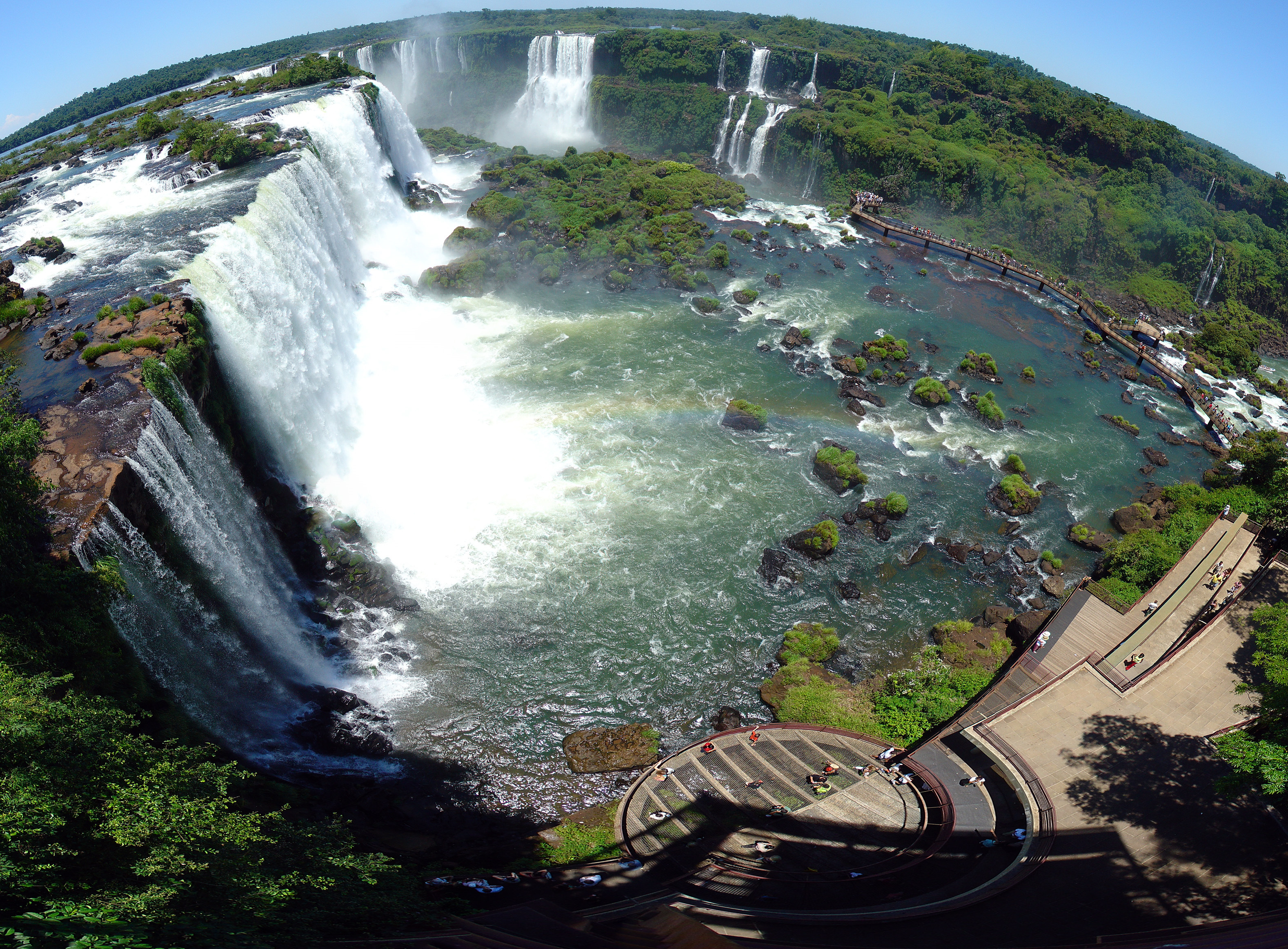
Finally, here's another great reason to visit Brazil: The waterfalls at Iguazu, which are shared by Argentina, Paraguay and Brazil.

Thanks to our fellow swapper for the great description. 
I hope you enjoyed this. Also check out the other entries if you haven't yet or leave comments below.

DISCLAYMER:
All umarked text in this post was supplied by a third party. The opinions expressed are not the same as those of the author of this blog. According to §§8 to 10 of the German Tele-Media Act, I am not obligated to monitor third party information provided or stored on my website. However, Ishall promptly remove any content upon becoming aware that it violates the law. My liability in such an instance shall commence at the time I become aware of the respective violation.

Thursday, March 25, 2010

SERIES Cultural ambassadors: ITALY (Cross-culture email connection)

Third in the series will be Italy, holiday destination #1 for Germans. Thanks to our fellow swapper for a great portrayal of this lovely country.

Hi,
I'm an Italian student who lives in the North East of Italy, not far from Venice. I added some pics of my town, Este, which is quite small, but also quite nice.
I study at University of Padua, which is one of the oldest of Europe (1222 a.C.); I study Modern Languages for Communication and Translation: English, Russian and Romanian.
I like both Padua and Este, what I don't like is Italy in general, LOL! Well, I just don't like the way it's ruled and the division between North and South; I wish Italians could be more united, but we are too much different to get on well, LOL. For example, we don't speak only Italian, but each region, each province and even each town has got its own dialect. If you move from Este to Monselice, which is 7 km from Este, you will hear a different accent; Padua's dialect is different from Este's one, and so on.
And, as I said, the greatest division is between North and South, and not only for dialects. To me, South is a completely different world! They're more open-minded and extroverted, they talk loud all the time, while in the North we are more suspicious and introverted. I'd rather get on well with an English than with a Southern Italian!
It would take MONTHS to talk about what I like and what I don't like about Italy... sometimes I feel proud of being Italian and sometimes I feel so embarassed and shameful, especially when Berlusconi says something stupid in front of the cameras of the whole world...
Our political situation is... aaarrrrgh, don't let me talk about that! It's a mess!
So here are some informations about my everyday life =)
- For breakfast, I usually eat what I find at home, like milk and Cheerios or tea with cookies, but when I get my salary I start spending it every morning at the coffee bar, with a cappuccino and a croissant! And for cappuccino I mean a REAL cappuccino with REAL coffee, not that colored water they drink in the USA! I see in movies that they always drink liters of that stuff, while you could just take a little cup of well-done-coffee and feel full of energy for the whole day! (I hope I didn't offend any American coffee lover =)
- In a typical work day I would get up at 7.30 (on Mondays, Thursdays and Fridays) or at 6 (on Tuesdays and Wednesdays), take the train and go to Padua, drag some friends to a coffee bar before the lessons start; spend the free hours studying at the University library or going shopping to Zara and Benetton or Accessorize, go to the cafeteria or just eat a sandwich. I usually go home at 7 pm (on Mondays and Tuesdays) at 5 on Wednesdays and at 1 am on Thursdays and Fridays.
If I get home early, I usually have lunch at home with pasta (when my French friend visited me was shocked because we eat pasta every day, LOL!), then I spend some time at the pc and then I go to the library or to the gym. I usually have dinner at 8-8.30 with meat/fish and vegetables and then I watch television with my mom, my sister and her parasitic boyfriend (they always talk while I want to listen to the television!).
Sometimes I go out with my friends because I work on Saturdays and Sundays.
- A day off: on Sunday, my mom usually cook something special and she buys little cakes. On this day I usually relax or go out with some friends.
- Some of the most important holidays in Italy:
1) June, 2nd, Republic Day The day commemorates the institutional referendum held by universal suffrage in 1946, in which the Italian people were called to the polls to decide on the form of government, following the Second World War and the fall of Fascism. With 12,717,923 votes for a republic and 10,719,284 for the monarchy, the male descendants of the House of Savoy were sent into exile (and now they sing at San Remo Festival, d'oh!).
To commemorate it, a grand military parade is held in central Rome, presided by the President of the Republic in the role of Supreme Commander of the Armed Forces. The Prime Minister and other authorities attend too. Prior to the foundation of the Republic, the Italian national day was the first Sunday in June, anniversary of the granting of the Statuto Albertino.
2) August, 15th, Ferragosto
Originally, it was related to a celebration of the middle of the summer and the end of the hard labour in the fields. In time, Roman Catholicism adopted this date as a Holy Day of Obligation to commemorate the Assumption of the Blessed Virgin Mary.
Before the Roman Catholic Church came into existence, however, this holiday was celebrated in the Roman Empire to honor the gods—in particular Diana—and the cycle of fertility and ripening. In fact, the present Italian name of the holiday derives from its original Latin name, Feriae Augusti ("Festivals [Holidays] of the Emperor Augustus")
Almost the entire month of August was taken as a holiday and leisure time in Italy in honor of this feast day.
In present days, Ferragosto is mainly a short holiday when Italians take brief vacations.
3) Each city has its own Saint patron and they celebrate him/her one day of the year. Este's patron is Santa Tecla and she's celebrated on September, 23.

- I think I don't need to say that Italy is famous for pasta and pizza, so I will list some dishes that are typical of my own region, Veneto:
BaccalĂ  con polenta (Stockfish with cornmeal porridge)

Musso with polenta (Mule with cornmeal porridge)
I know that mule could sound disgusting, but it's really yummy! Sorry to vegetarians =(

Lasagne alla bolognese or Pasticcio (meat pie)

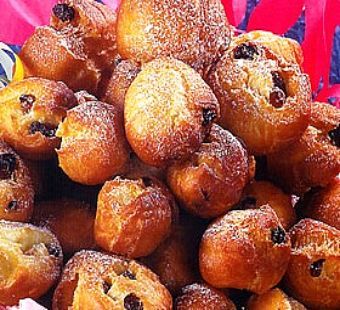
Fritole (Italian: Frittelle) (Fritters)

Torta sbrisolona (I can't find any translation, LOL)

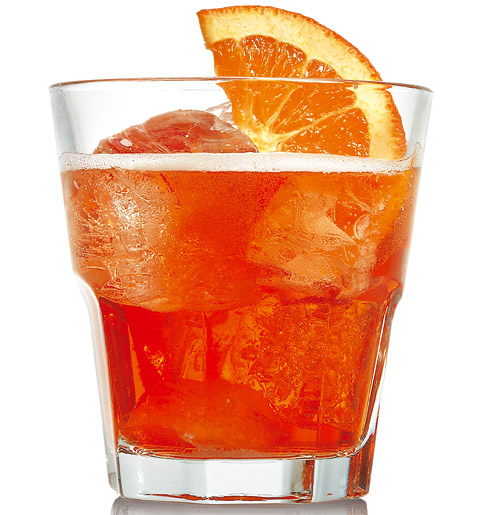
Spritz - the most drank cocktail of North Italy, really cool at this moment


When it's time to eat, I'm really proud of being Italian!
I hope you had fun reading my email!

Oh Italy,
the news we get about Berlusconi are really negative. I only partly understand why so many Italians vote for him again and again, despite having seen some background stories on his public appeal.
I had to laugh out loud when I saw the description of the south and the north. I'm from the north of Germany as well and could have said exactly the same thing about the nature of people. Northerners here are just as reserved, but honest and make true friends. It can't be about the weather as the south of Germany is rather similar to the north of Italy. It can't be economics either. In Germany the north is poorer, in Italy it's more the south. If anybody has a clue what could be the reason just comment below :-)

DISCLAYMER:
All umarked text in this post was supplied by a third party. The opinions expressed are not the same as those of the author of this blog. According to §§8 to 10 of the German Tele-Media Act, I am not obligated to monitor third party information provided or stored on my website. However, Ishall promptly remove any content upon becoming aware that it violates the law. My liability in such an instance shall commence at the time I become aware of the respective violation.

Wednesday, March 24, 2010

Visit to the Netherlands - part 2

As my fellow swapper in the cross-cultural email connection swap explained here, there are some current developments in the Netherlands that are quite worrisome. The "party of freedom" (how ironical) and their party leader Geert Wilders are on a roll against minorities in the country, abusing the economic crisis and rising tensions for their own twisted rhetorics. He even dares talking about deportation. Unfortunately Wilders is a very intelligent character with great debating skills. We've seen that strategy before...
Due to our German history much of this happens under cover here, whereas in neighboring countries it is discussed publicly (see Switzerland for the minaret ban proposal). I am not saying this is better or worse. Just in general it seems a common theme that the old mechanism of difficult economic and political times and the search for easy scapegoats along with xenophobia is starting once more. For me it was especially hard to believe that the age of the 60s had left so little effect in Germany. I mean the people in power right now were part of the movement that demanded prosecution of WW3 crimes and attacked their parents for tabooing everything that had happened.
My Dutch friend told me he really loved de Hague, but he couldn't warm up to it as so many people voted for Wilders. I wonder if the situation will get worse once more or people will realize sooner where this might be going.

The Netherlands used to have a very multicultural, tolerant image in the past, which they are slowly losing. The problems of integration are boiling up just as they are in Germany and other countries.
This picture very much reminded me of the USA. On this square kids from Africa and the Middle East were playing together. On the next it was the Asian kids...

We have large city areas with majorities of Turkish people. It is natural that these areas develop (think China Town for another example) but still, the trend to ghettoization is quite sad. Mosques are often actually doing quite a bit of work opening the communities and creating dialogue with German neighbors. Multiculturalism really is nothing to be proud of, interculturalism is.

Hmm. Naming similarities is more difficult than finding differences. How typical :-(
Well, the Netherlands and Germany share a good deal of media, education, economic, political and religious

factors. In consequence it is quite easy for my friend and me to converse without much need for explanations.
Another thing that the Netherlands and Germany share, for example, is that they have three layers of governing: federal, provincial (in Germany it is state level) and communal. You can see the flags of all Dutch provinces here (the one of Holland with the hearts and diagonal blue stripes is best known, I think):


The middle layer of government, so to say, doesn't have as much power in the Netherlands as it does in Germany. That means over here you might get in trouble if you change from one federal state to the next as a high-school-student (and a few of them are only city-size), because the school systems are completely different. It makes a lot of things very complicated, as you can imagine.

Ok, enough of the complicated things. We had great weather and the architecture of the city is very interesting, a blend of historic houses and (mostly) well-designed skyscrapers, where most things are in walking distance.

And finally, just for fun, this picture made me laugh. I am getting the idea this hotel tower is never going to be finished... (if you don't get the joke, check the name of the hotel)

Tuesday, March 23, 2010

SERIES: Cultural ambassadors: NETHERLANDS (Cross-Culture Email Connection)

We will start the series off with the Netherlands, as I was just there to visit. I thank the fellow swapper for the great portrayal of his country. After an hour of formatting, here you go:


Hello swap partners & swap coordinator,

here is the Cross Culture e-mail connection SWAP from the Netherlands (or Holland, Hollanda, Pays Bas, der Niederlande etc.etc.)
As it is the second day of spring today I need to be carefull not to write a too sunny picture of our little country, the little bit of sun we allready got is making me very excited, but I will do my best :-).
  
A description of what we eat for breakfast:

We tend to eat slices of bread with butter and cheese, ham or chocolate sprinkles or .....anything. The bread is mostly accompanied with a glass of milk, buttermilk or tea.

a short description of a typical work day:

A typical work day .... that is a difficult question, it depends of course of your type of work.
A full time working week is 40 hours, but quite a lot of people work part time, certainly the women.
At my own family, both my husband and myself work 32 hours, so 4 days per week. Our 3 kids go to school & afterwards from 3 onwards to a post-school group where they play & sport.
I work as an industrial engineer at a big food company and next to that I have 2 websites with home-made product & a blog to maintain (see links below), so after a working day at the office & when the kids went to bed at 20:00 my next working day starts sewing & painting :-), but I love it all!!

a description of your favorite day off (weekend or holiday):

We wake up normal time around 7:00, do some games in our pyama, have a good breakfast & take the bicycle to cycle around the village, to the forrest, to a playground. We will have lunch in the village and cycle back to our country-side house. The afternoon we will spend in the garden, doing some light chores, playing with the animals, snoozing in the sun and finish with a BBQ with friends who will have arrived at our place during the afternoon. The evening is spend chatting, relaxing with a sweater next to the fire on the terrace.


a short description of your country and its position in the world, including something you like about it and something you don't like:

The Netherlands is a very wealthy little country in Europe (green circle in red square), next to the North Sea. Most of the country is below sea-level and protected by dikes & mills. There are 16mio inhabitants.
I really like that people are quite direct and straight forward, they would tend to be honest and not make things nicer or pretter then they are.
I do not like the fact that there is a political party which is becoming more popular at the moment who is very harsh on other cultures and totally not tolerant. This is not fitting our cultural history, our openess and certainly not fitting to my ideas!!

a list of languages (optional: dialects) that are spoken in your country:

In the Netherlands we speak Dutch. There are of course a few dialects and there is even one dialect which is now recognised as a language: Frysian, but that last one is only spoken in one of the provinces.

As the country is really small, the most people will speak at least one or two or three other languages, mostly English, German and French which we all learn at high school, but also spanish is becoming very popular and of course at university many other languages.

a list of the three most important holidays of your country and how they are cebrated:


This is a nice subject. Of course there are the Christian holidays like christmas and Easter which are big but quite common in Europe.
The two most special though are:

1- Carnaval. Celebrated in February only in the southern part of the Netherlands and a bit like the Brazilian carnaval. But where in Brazil it is sunny and people dress beatifully and dance beatifully, carnaval in NL is more about dressing fun, making jokes, drinking beer & having a parade with also fun cars, trucks etc. It lasts from saturday until tuesday and the people who are really in for it, they will really party 4 day long and will be busy preparing anything from 11-11 (11th of November) onwards when the new prince carnaval is elected (one prince per village)


2- Sinterklaas. Every year mid novembre Sinterklaas arrives from Spain with his helpers, the "zwarte pieten" (black Pete's) and one the 5th of December all kids will get presents from Sinterklaas and he goes back. Pls find a ppt attached to explain more about this tradition and for those who might have worries: there is no racisme related to this story & as it is such a long tradition nobody has issues with it here. Sinterklaas is pronounced approximately the same as SantaClaus, but remember for the future, the story is very different, the person is not the same & in NL we do not have Santa Claus (allthough the shops will try to introduce)
There are a few other countries who also have a version of Sinterklaas, like in Slovenia, Zwitserland etc. a list of that can be found on slide 9 of the ppt too!!!!
 

description of some national specialties/products:

Of course we are famous for cheese, mills, wooden shoes, Delfts blauw porcelain !!

* Wooden shoes are the traditional farmer shoes, warm in winter, cold in summer. It is still worn by some people during their work-day but then often in a version with a leather top.
* Mills & dikes, those are of course absolutely necessary to keep the water out. Not much more to tell about that. The traditional versions of windmills (see picture at the next subject) are still operated but often only for hobby, tourism or to make some flower for bread. The real milling to keep our feet dry is done by electrical big pumps.

* stroopwafels, a very nice type of cookie with syrup in between the layers, this a link to the recipe in english:
http://www.dianasdesserts.com/index.cfm/fuseaction/recipes.recipeListing/filter/dianas/recipeID/694/Recipe.cfm
* A city in the West is very famous for its blue painted porcelain, allthough very old of course and for long only still popular for tourists, this kind of grahics is going through a true revival and it is an absolute trend to have products with these prints, sometimes made more modern and always use in a different way then in the past.

The old stuff:


The new trendy stuff using the old graphics:
Want to see more: look at this page.

a description of the role of men and women in your country:

there used to be a saying that the only right of women is to keep the kitchen clean, but times luckily have changed in the meantime.
In my generation it is now very common that men and women are equal & often both work 4 days per week only to also share more of the caring for the kids. We are not quite there yet, not 100% equal yet, but I think NL is pretty advanced in emancipation.

a famous person from your country and what she/he is famous for:

Of course there are plenty of famous Dutch people :-), but I will introduce to you MC Escher, not so many people know he is from NL
http://www.mcescher.nl/indexuk.htm

Of Course MC Escher is famous for his mathematical prints, but he also made more wonderful art during his lifetime.

a type of craft that is typical for your country (doesn't have to be typical ONLY for your country):

NL has a lot of tradition in textile making and one very old art is called "kantklossen", as you can see on the picture, you make a kind of lace but with wooden threadholders and using amazing complex patterns.

the role of religion in your country:

The Christian religion used to be most common in NL, split between catholics, protestants and some smaller Christian religions. But of course the islam, hinduism and many other religions are becoming more and more popular.
Religion is absolutely free in NL and is not present in eg. politics and also not so much on schools (with a few exceptions), everybody is free to practice or not to practice.

I hope you enjoyed reading more about the Netherlands and who knows you might be visiting it some day
rgds

I couldn't upload the Sinterclaas presentation. If anyone tells me how to do it, I will add it immediately. I think you really get a great picture of the Netherlands (and Holland is by the way just a province of the whole country). Here in Germany we often eat Dutch cheese, although we grossly misspronounce it ;-) We pronounce Gouda "Ghauda" while it is actually something like "Choouda" with a very guttural "ch"... The syrup waffles I loved as a child and still eat them from time to time. With regard to the festivals I was stunned when my Dutch friend told me their "big-exchanging-presents-festival" is Sinterclaas, not Christmas. Hope you all enjoyed the first part of the series.

DISCLAYMER:
All umarked text in this post was supplied by a third party. The opinions expressed are not the same as those of the author of this blog. According to §§8 to 10 of the German Tele-Media Act, I am not obligated to monitor third party information provided or stored on my website. However, Ishall promptly remove any content upon becoming aware that it violates the law. My liability in such an instance shall commence at the time I become aware of the respective violation.